
Ever wonder how a simple game kickstarted a billion-dollar sport? It began in busy arcades where a few brave gamers took a shot at something new. Their passion lit a spark that soon turned into epic battles streamed all around the globe.
Back in the day, these small tournaments were just fun meetups where players showed off their skills. But as more and more people joined the fray, those early contests grew into big-time matches that left everyone on the edge of their seats.
Now, competitive gaming isn’t just a quirky hobby, it’s a full-on sport where every win matters. Dive into the story of how those early games set the stage for the high-stakes competitions we see today. Cool, right?
Evolution of Esports: From First Competitions to a Billion-Dollar Industry
Imagine a time when gaming was just starting out. Back in 1972, the Intergalactic Spacewar Olympics at Stanford got gamers hyped as they battled it out in Spacewar! for a Rolling Stone subscription. Ever heard that this wild tournament kicked off the way for organized gaming long before esports was even a thing?
By 1980, things were already shifting. The first big official Space Invaders tournament grabbed everyone’s attention and showed that video games weren’t just a casual pastime, they could be competitive. Then, in 1981, Walter Day set up Twin Galaxies to keep track of high scores, giving video games a serious, record-setting vibe both in America and around the world.
The 1990s brought even more excitement with the Nintendo World Championships. This event highlighted the explosion of arcade classics and home console hits like the Atari 2600 and NES. Plus, as more people got online thanks to better networks, gamers started connecting in ways that paved the road toward today’s epic tournaments.
Jump into the 2000s and you’ll see esports morph into a full-blown professional sport. Teams, coaches, and big cash prizes started showing up in games like StarCraft and Counter-Strike (a popular first-person shooter). The scene exploded, with viewers climbing from 235 million in 2015 to a whopping 443 million, and revenues topping $1 billion by 2019.
These key moments, from humble beginnings to high-stakes, team-based battles, have built an industry that’s always evolving, always thrilling.
Evolution of Tournament Culture in Esports
Pioneering Esports Tournaments in Competitive Gaming History
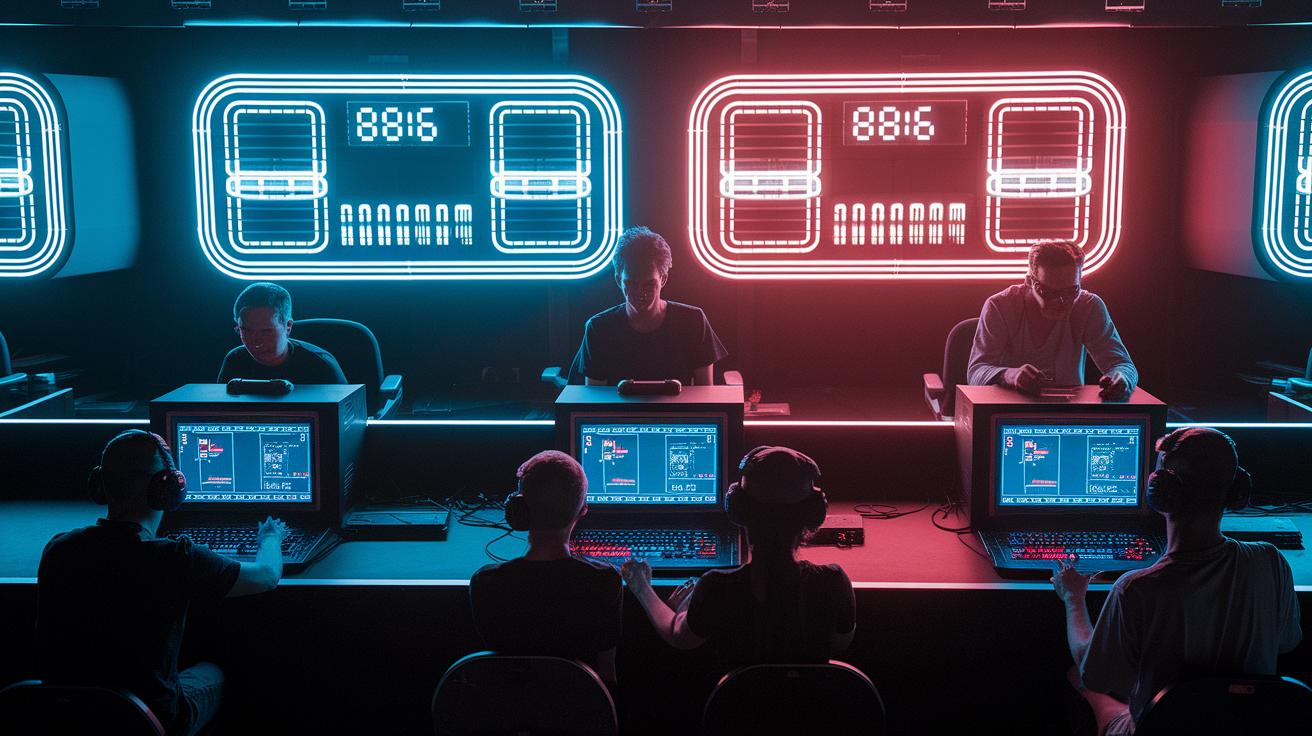
Back in 1972, the Intergalactic Spacewar Olympics kicked off competitive gaming like never before. Gamers would watch as scores were tallied by hand and shown on neon boards, each point sparking a real sense of excitement, like the rapid click of keys in a heated match.
Then in 1980, the Space Invaders Championship pushed early tech to its limits with clever tweaks to the scoring system. It felt a bit like watching the game evolve right before our eyes, with each new trick making the challenge even more real.
By 1981, Twin Galaxies stepped in with a fresh way to track high scores. Dedicated staff carefully calibrated the system during the heyday of arcade culture, so every victory was recorded accurately, much like a well-planned strategy session with your crew.
In 1990, the Nintendo World Championships mixed arcade and console games into one big event. Organizers even experimented with custom game modes that turned regular play into unique, one-of-a-kind experiences, adding a surprising twist like discovering a secret level in your favorite game.
By the late 1990s, LAN tournaments for games like StarCraft (a real-time strategy game) and Counter-Strike (a first-person shooter) set new standards. With faster networks and on-site tech setups, local contests quickly grew into global spectacles that connected gamers from all over.
- 1972: Intergalactic Spacewar Olympics with trial-and-error rules and manual scorekeeping
- 1980: Space Invaders Championship featuring early scoring algorithm innovations
- 1981: Twin Galaxies high-score events with dedicated calibration and record tracking
- 1990: Nintendo World Championships offering multi-title, custom game modes
- Late 1990s: LAN tournaments for StarCraft and Counter-Strike showcasing network and tech advancements
Formation of Professional Leagues in Esports History
Back in 1981, Twin Galaxies began keeping a formal record of high scores. This move was like unlocking the first level of organized play. It showed everyone that tracking achievements could help build real competitive communities. Kind of like when you discover a hidden path in your favorite game that leads to epic adventures.
In 2002, Major League Gaming (MLG) hit the scene in North America with full seasons and regular tournaments. Gamers started to see esports as more than just a fun hobby, it was becoming a sport with clear rules and even career chances. Think of it as switching from solo score chases to teaming up with friends for a well-planned raid.
Then in 2011, Twitch launched its game-streaming platform, changing the way we watch live matches. Suddenly, fans could catch competitions as they unfolded, much like tuning into a major sports event. By the mid-2010s, franchise leagues like the Overwatch League and LEC emerged, with teams representing cities and stirring up local pride during global showdowns.
By the start of the 21st century, roles like coaches, analysts, and trainers started showing up in esports teams, mirroring traditional sports. And by 2019, esports revenue had blasted past the $1 billion mark, fueled by league sponsorships and media deals.
- 1981: Twin Galaxies kicks off formal high-score tracking
- 2002: MLG launches full seasons and tournaments
- 2011: Twitch changes the game with live streaming
How Game Streaming is Shaping Player Experiences: Headline Insights
Technological Advances Driving Esports Evolution

We already chatted about how network upgrades in the 1990s, local LAN tournaments in Counter-Strike, and Twitch’s 2011 debut changed the game. Ever felt that buzz when a burst of rapid keystrokes flips a match around, like unlocking a secret bonus level just when you need it most? Today, real-time broadband and streaming technology have turned esports into live, interactive events. For more details, check out The Evolving Landscape of Multiplayer Gaming: Headline Insights.
Global Milestones and Modern Impact in Esports History
Today, esports is a wild ride full of record-smashing events and huge global fan bases. In just a few years, viewership jumped from 235 million in 2015 to 443 million by 2019, showing that competitive gaming is a force to be reckoned with. Ever imagined watching the League of Legends World Championship finals with over 100 million viewers? It’s as intense as landing that perfect combo in your favorite fighting game.
Competitions now bring in some crazy prize money, too. Take Dota 2’s The International for example, its prize pools have gone over $25 million, almost like unlocking an epic bonus level. Colleges and universities aren’t sitting this one out either. Many now offer esports scholarships, degrees, and special courses that get gamers ready for amazing careers in this booming field.
It’s even more awesome that esports made its medal debut at the 2022 Asian Games, proving its impact is on par with traditional sports. And with community events and gaming conventions, fans and professionals are coming together more than ever. For a closer look at how these events spark energy in the gamer community, check out How Gaming Conventions Shape Gamer Culture.
- 2015-2019: Viewership rose from 235 million to 443 million
- Dota 2 prize pools exceeding $25 million
- League finals with 100 million concurrent viewers
- Launch of academic programs and inclusion in the Asian Games medal event
Final Words
in the action, this article took you through the key moments of competitive gaming, from early tournaments and legendary competitions to the rise of professional leagues and futuristic tech that brought live streaming and global contests into play. We broke down the milestones that redefined how games are played and watched, highlighting major shifts throughout esports history. Keep enjoying the thrill of each match and celebrate the evolution that continues to change the game every single day.
FAQ
What is the history of eSports?
The history of eSports traces back to the early 1970s with the Intergalactic Spacewar Olympics, evolving through Space Invaders tournaments and pioneering events like Twin Galaxies competitions that built the foundation for today’s billion-dollar industry.
What was the first major eSports event in history?
The first major eSports event is recognized as the 1980 Space Invaders Championship, a sanctioned tournament that set the stage for competitive video game events and inspired future gaming competitions.
What is the #1 esport in the world?
The top esport title is often considered League of Legends, which draws huge global audiences and remains a leader in competitive gaming due to its strategic gameplay and massive tournament viewership.
Who is the father of eSports?
Walter Day is celebrated as a pioneer of competitive gaming, earning a reputation as the father of eSports for establishing Twin Galaxies and documenting early high-score competitions that shaped the industry’s history.


